Dwarf Banana
|
Musa Acuminata
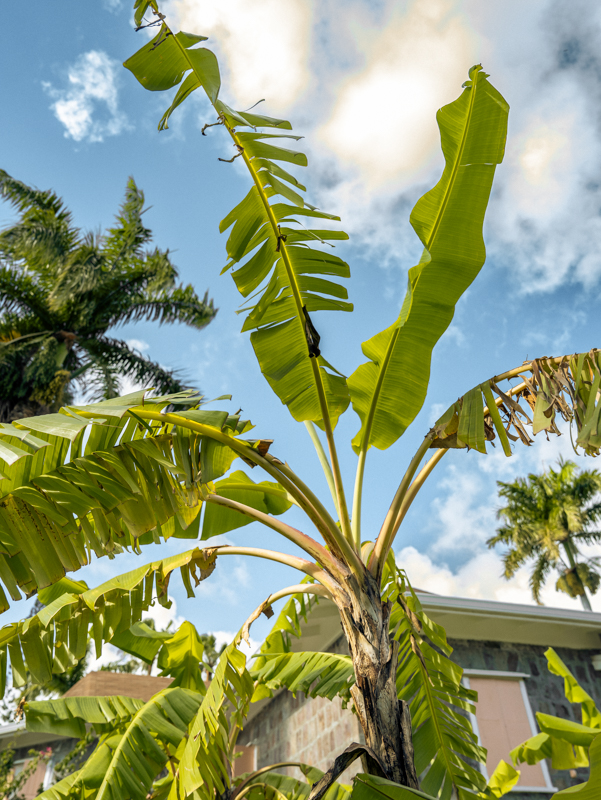
Musa acuminata also known as the Dwarf banana is an evergreen, perennial, herbaceous plant growing around 4 to 9 feet tall. The plant produces a clump of large pseudostems up to 6 to 12 inches diameter at the base, that make it appear rather tree-like. At Palm Garden Nevis it can be found below Event Area 4.
Uses:
Musa acuminata, commonly known as the Dwarf banana, has a wide range of uses:
- Culinary Uses: The fruit is widely consumed fresh or cooked. It can be used in smoothies, desserts, salads, and various dishes. Different varieties, like the Cavendish and plantain, serve different culinary purposes.
- Nutritional Value: Bananas are rich in essential nutrients, including potassium, vitamin C, vitamin B6, and dietary fiber, making them a healthy snack option.
- Culinary Ingredients: Green bananas and plantains are often used in savory dishes, chips, and fritters in many cultures.
- Medicinal Uses: Traditional medicine has utilized bananas for their potential benefits, such as aiding digestion and providing energy. Banana peels are sometimes used in home remedies for skin conditions.
- Fiber Production: The leaves and pseudostems can be used to produce natural fibers, which are used in textiles, handicrafts, and biodegradable packaging.
- Animal Feed: Banana plants, including leaves and pseudostems, are sometimes used as fodder for livestock.
- Ornamental Use: The banana plant is often grown as an ornamental plant in gardens due to its large, attractive leaves and tropical appearance.
- Sustainable Agriculture: Banana plants can help improve soil quality and prevent erosion, making them beneficial in agroforestry systems.
- Cultural Significance: In many cultures, bananas hold symbolic meanings and are often used in rituals, celebrations, and traditional medicine.
Sources:
– Wikipedia
– Useful Tropical Plants Database
– Palmpedia
– Earthone
– Useful Tropical Plants Database
– Chat GPT 4