Viviparous agave
|
Agave Vivipara
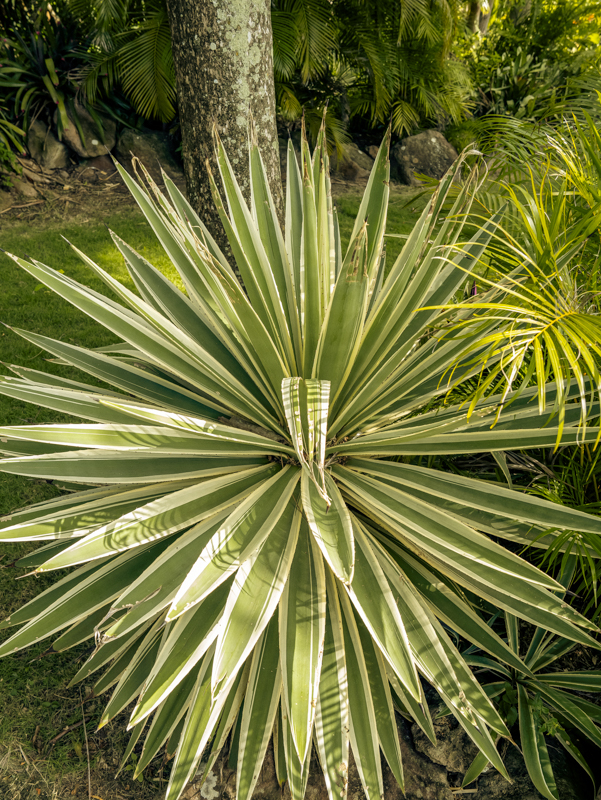
Agave vivipara also known as the Century plant,is a stemless evergreen, succulent plant forming a large, rosette of leaves up to 39 inches tall and, eventually, a flowering stem that can be up to 16 feet tall.At Palm Garden Nevis it can be found above Event Area 5.
Uses:
Agave vivipara, commonly known as the Viviparous agave or Cuban agave, has several uses:
- Culinary Uses: The young leaves and flowers can be consumed in some cultures, and the heart of the plant is sometimes cooked and eaten.
- Medicinal Uses: Traditionally, parts of Agave vivipara have been used in folk medicine for their potential health benefits, including treating wounds and skin conditions.
- Fiber Production: The leaves contain strong fibers that can be harvested and used to make ropes, twine, and other handicrafts.
- Ornamental Uses: Agave vivipara is often cultivated as an ornamental plant in gardens and landscapes due to its striking rosettes and architectural form.
- Erosion Control: Its deep-root system helps stabilize soil, making it useful for preventing erosion in arid and semi-arid environments.
- Cultural Significance: In some regions, agaves hold cultural importance and may be involved in traditional practices.
Overall, Agave vivipara is valued for its practical uses, ornamental appeal, and ecological contributions.
Sources:
– Wikipedia
– Useful Tropical Plants Database
– Palmpedia
– Earthone
– Useful Tropical Plants Database
– Chat GPT 4