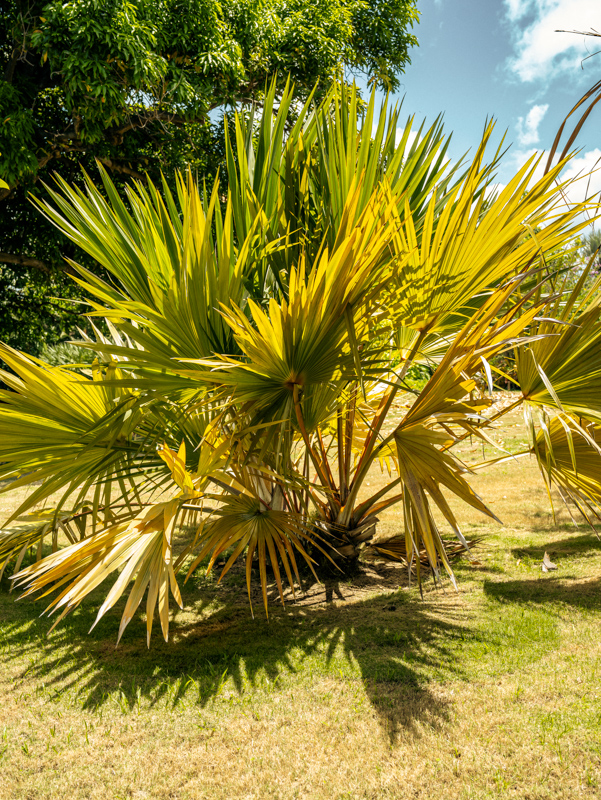
Coccothrinax crinita, commonly known as the Old Man Palm due to the distinctive fibrous “beard” covering its trunk, has several uses, particularly in tropical and subtropical regions where it is native:
- Ornamental Landscaping: The Old Man Palm is highly valued in landscaping for its unique appearance. Its fibrous trunk and fan-shaped leaves make it a popular choice for gardens, parks, and as a specimen plant in both residential and commercial landscapes. It adds a distinct aesthetic to tropical-themed gardens and is often planted for its exotic, eye-catching look.
- Thatching and Weaving: The leaves of Coccothrinax crinita are traditionally used for thatching roofs in rural areas, providing a natural and sustainable material for building shelters. The leaves are also utilized in weaving to make items like baskets, mats, and hats. These woven goods are important for local crafts and contribute to rural economies.
- Fiber Production: The distinctive fibrous “beard” on the trunk can be harvested and used in handicrafts. While not as commonly used as the leaves, these fibers can be incorporated into ropes, brushes, and other traditional items, supporting artisanal crafts in its native regions.
- Wildlife Habitat: The Old Man Palm produces small fruits that are a food source for birds and other wildlife, helping to support local biodiversity. Its dense foliage also provides shelter and nesting sites for small animals and insects, making it an ecologically valuable species.
- Erosion Control: The root system of Coccothrinax crinita helps stabilize the soil, making it a suitable plant for erosion control in coastal and other vulnerable areas. Its ability to thrive in sandy, rocky soils makes it particularly useful for stabilizing slopes and shorelines.
- Drought and Salt Tolerance: This palm is highly drought- and salt-tolerant, making it well-suited for coastal gardens and areas with poor soil conditions. This resilience allows it to thrive in areas where other plants might struggle, contributing to its popularity in challenging growing environments.
- Cultural Significance: In its native Cuba, the Old Man Palm is sometimes planted for its symbolic value and is associated with heritage and local identity. It is also used in some traditional ceremonies and cultural practices.
These uses highlight Coccothrinax crinita as a valuable plant for ornamental purposes, traditional crafts, and ecological benefits. Its unique appearance and resilience make it an interesting and versatile addition to a variety of landscapes.
Sources:
– Wikipedia
– Useful Tropical Plants Database
– Palmpedia
– Earthone
– Useful Tropical Plants Database
– Chat GPT 4