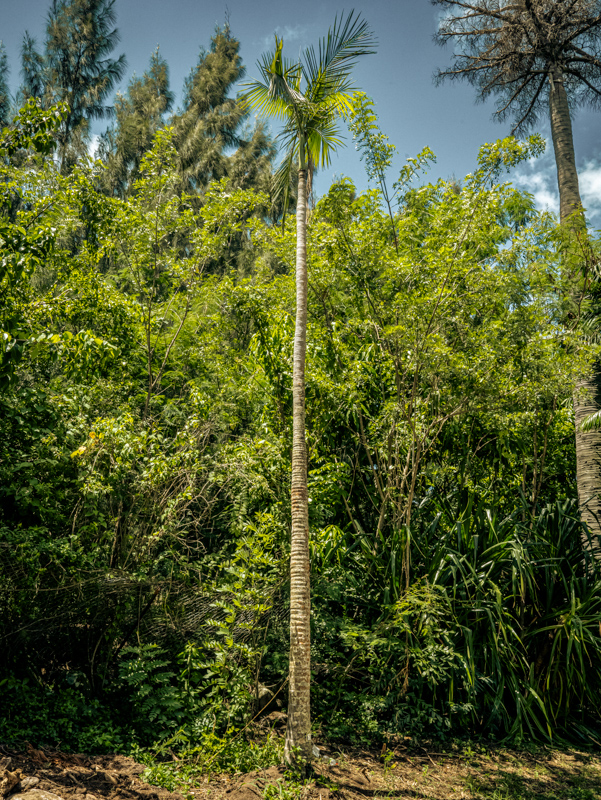
Ravenala madagascariensis, commonly known as the Traveler’s Palm or Traveler’s Tree, is a striking and iconic plant native to Madagascar. Although it resembles a palm, it is actually more closely related to bananas and bird-of-paradise plants, as it belongs to the family Strelitziaceae. Known for its large, fan-shaped leaves and impressive height, the Traveler’s Palm has several uses and cultural significance:
- Ornamental Landscaping: The Traveler’s Palm is highly valued in tropical and subtropical gardens for its dramatic, fan-like appearance. It is frequently planted as a focal point in public parks, resorts, and botanical gardens, where its unique form creates a striking visual impact. The leaves, which are arranged in a flat, symmetrical fan, can reach up to 3 meters (10 feet) in length, adding a lush, tropical feel to landscapes.
- Water Collection: The Traveler’s Palm has earned its name because it is reputed to provide water to thirsty travelers. The leaf bases and stems can store rainwater, which can be accessed in emergencies by breaking the leaf stems. While the water is not always considered the best for drinking, it has been used historically by travelers and locals when other sources are scarce.
- Thatching and Construction Materials: In Madagascar, the leaves of Ravenala madagascariensis are traditionally used for thatching roofs on rural homes and structures. The large, durable leaves provide effective natural insulation and protection from rain. Additionally, the leaf stalks and trunks are sometimes used in the construction of walls, fences, and rafts, as the materials are lightweight and readily available.
- Cultural and Symbolic Significance: In Madagascar, the Traveler’s Palm holds cultural significance and is often considered a symbol of hospitality and resilience. Its fan-like shape, which tends to align with an east-west orientation, is thought to help travelers navigate and find their way. It also has a place in local folklore and traditional stories, symbolizing guidance and resourcefulness.
- Wildlife Habitat and Food Source: The Traveler’s Palm produces flowers and fruits that attract various pollinators, such as lemurs, birds, and bats, which help with pollination and seed dispersal. Its structure provides shelter for wildlife, contributing to the biodiversity of the ecosystems where it grows.
- Potential Medicinal Uses: While not widely documented, parts of the Traveler’s Palm have been used in traditional medicine in Madagascar. Locals sometimes use the leaves, sap, or roots for remedies, although specific uses and efficacy vary by region and cultural practices.
- Shade and Shelter: Due to its large leaves, Ravenala madagascariensis provides substantial shade and can create a cooler microenvironment. This makes it a popular choice in public gardens, parks, and recreational areas, where it provides respite from the sun and adds to the tropical ambiance.
Ravenala madagascariensis is an impressive and multifunctional plant valued for its ornamental beauty, practical uses, and cultural significance. Its adaptability to various environments and its contributions to both local traditions and ecosystems underscore its importance in Madagascar and tropical landscapes worldwide.
Sources:
– Wikipedia
– Useful Tropical Plants Database
– Palmpedia
– Earthone
– Useful Tropical Plants Database
– Chat GPT 4