Shortleaf fig
|
Ficus Citrifolia
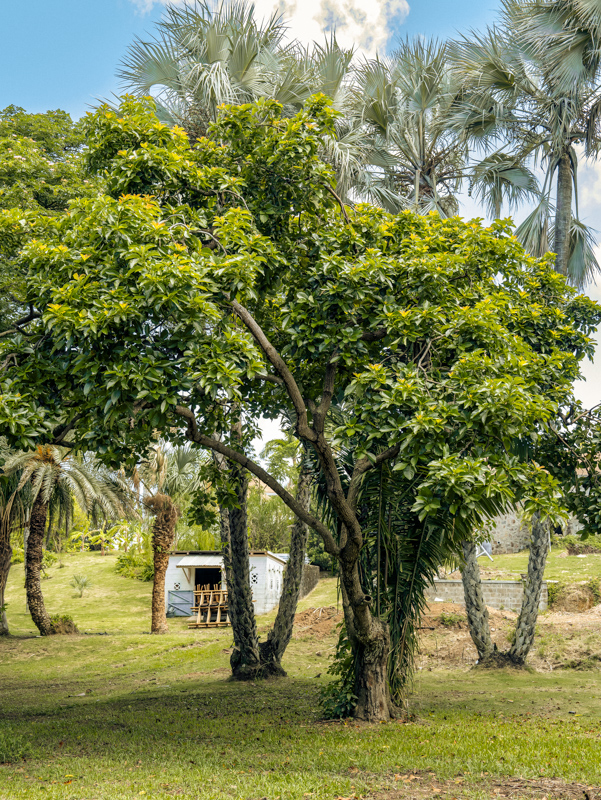
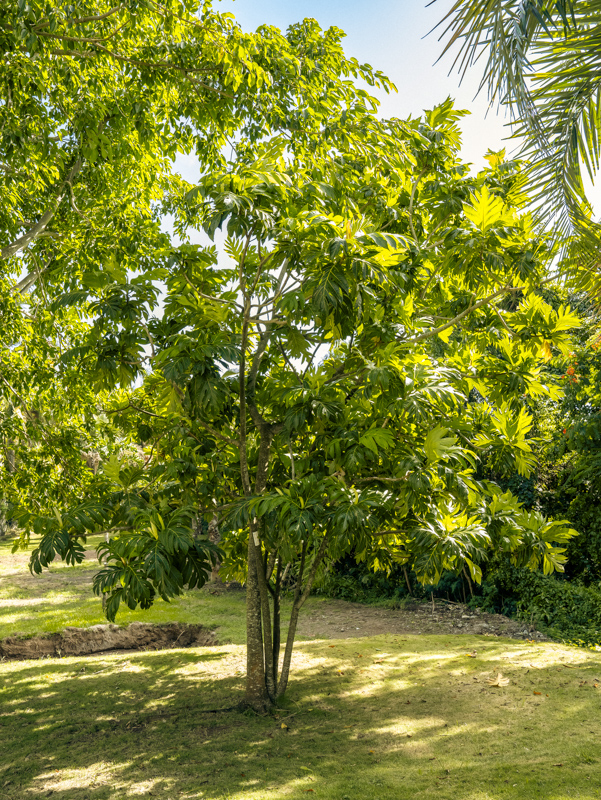
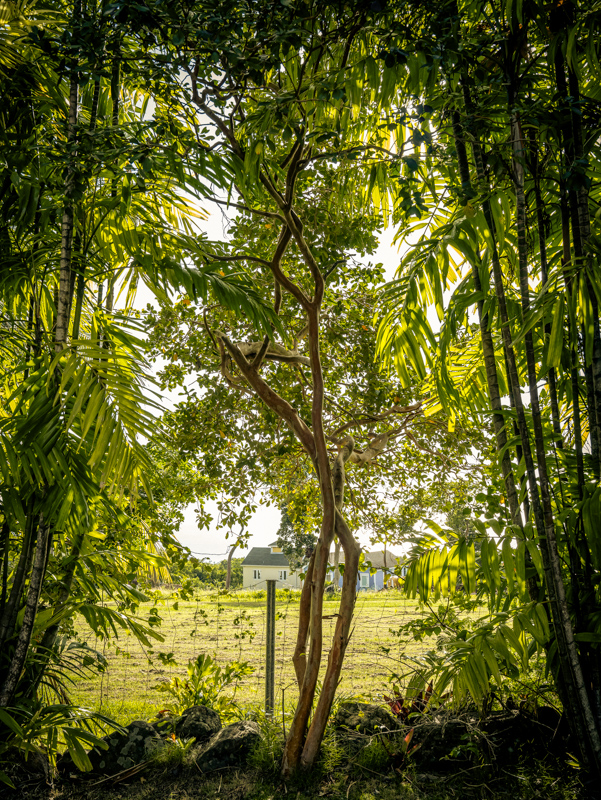
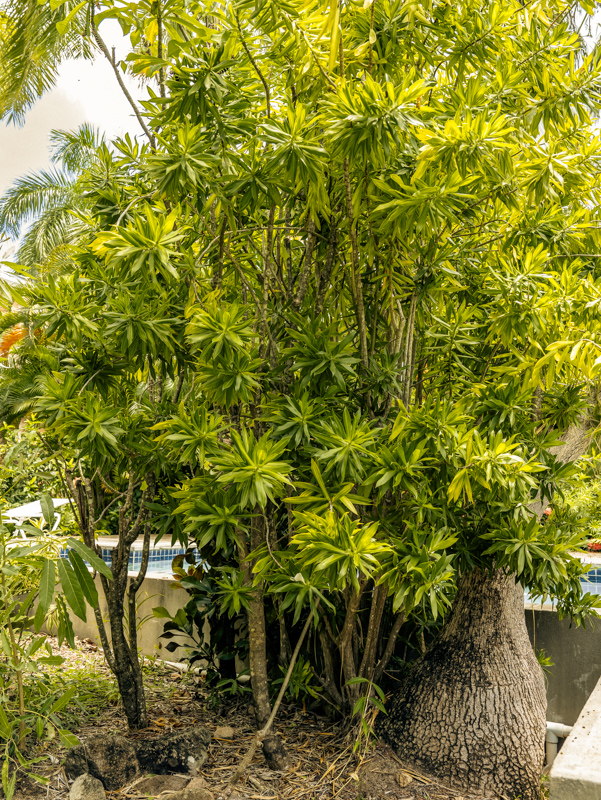
Ficus Citrifolia commonly known as the Shortleaf fig, typically reaches a height of 30 to 60 feet tall. This tree may cover a wide area due to their ability to drop aerial roots from branches and spread horizontally, fusing with the parent tree as they grow. They have a broad top, light grey bark, some aerial roots and milky sap. At Palm Garden Nevis it can be found above Event Area 5.
Uses:
Ficus citrifolia commonly known as the Shortleaf fig, has several notable uses:
- Landscaping: Ficus citrifolia is often planted as an ornamental tree in parks and gardens for its attractive foliage and unique growth habit. Its spreading branches provide good shade.
- Specimen Tree: Its impressive size and form make it suitable as a specimen tree in landscaping designs.
- Cultural Significance: In some cultures, the banyan fig is regarded as a sacred tree and is associated with various traditional practices and beliefs.
- Wildlife Habitat: The tree provides habitat and food for various wildlife species, including birds and insects. Its fruits are consumed by birds and other animals, supporting local ecosystems.
- Erosion Control: Due to its extensive root system, Ficus citrifolia can help prevent soil erosion, making it useful for stabilizing soil in certain environments.Medicinal Uses:
- Some parts of the tree, including the bark and leaves, have been used in traditional medicine for their potential health benefits, although specific applications can vary.
- Timber: While not as commonly harvested as other fig species, the wood can be used for various applications, though it is generally not as commercially valuable.
Sources:
– Wikipedia
– Useful Tropical Plants Database
– Palmpedia
– Earthone
– Useful Tropical Plants Database
– Chat GPT 4